Amanda Wasn’t Fleeing a War
The danger Amanda* (not her real name) fled from did not come from an army. It came from inside a house. Her story reminds us that war is not the only thing people have to flee.
Amanda remembers safety by what she was able to forget. At our shelter in Athens, she could leave her belongings in her room and walk out of the door. No hiding them, wondering whether they would still be there when she came back.
“I felt safe,” she told us. “I would leave my things and go out. It never crossed my mind that something would happen to me or my things.”
For most of us, this is unremarkable. For Amanda, it was new.
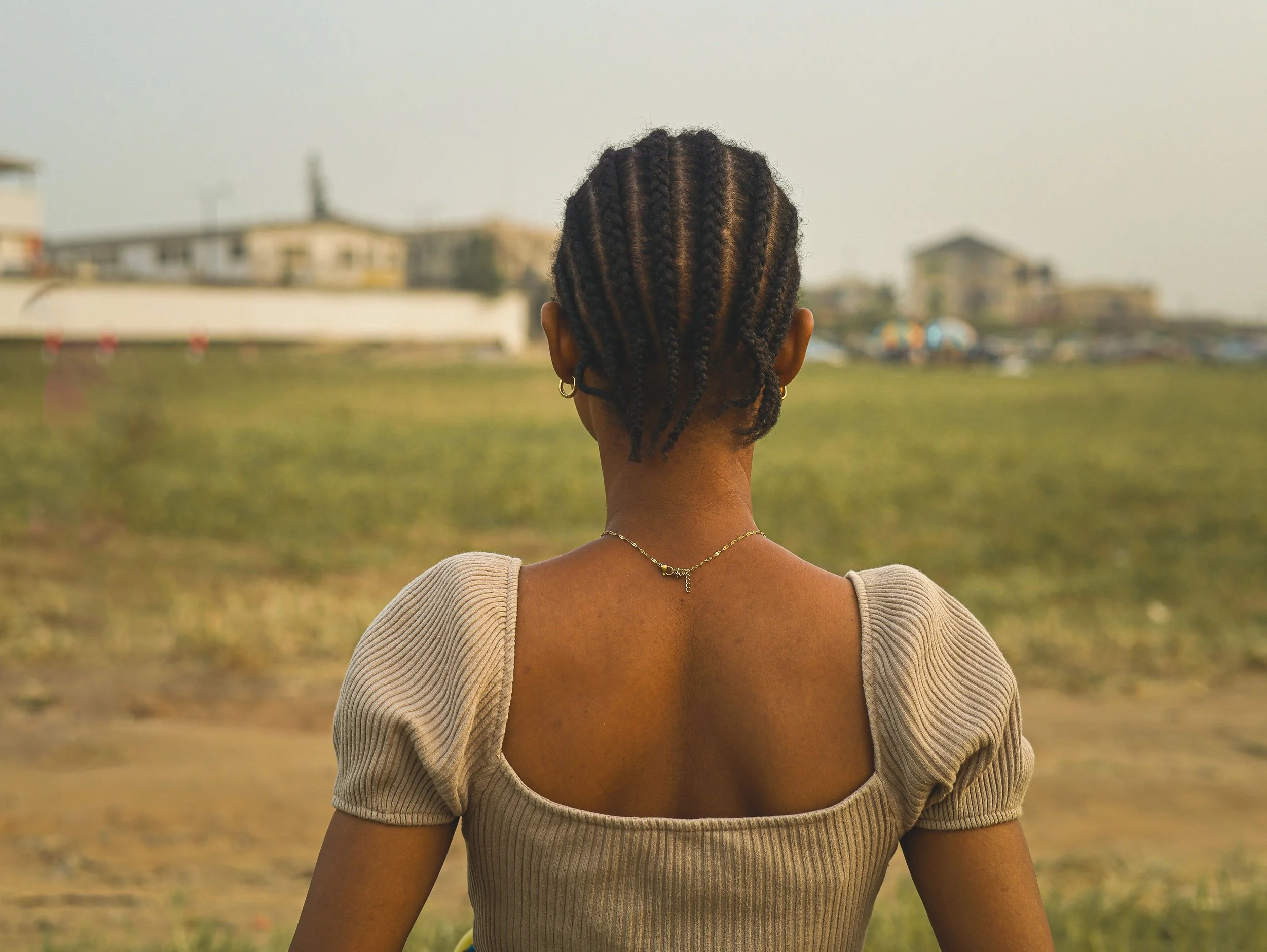
Amanda is not pictured. Her name has also been changed to protect her privacy.
She grew up in Johannesburg, the eldest of three children. Her mother died when she was 12 and, while her father worked, Amanda began doing what eldest daughters so often do when a family is under strain: She stepped into the parental role and looked after her younger siblings.
Then her father disappeared.
A family friend offered the children somewhere to live. Amanda trusted him. He began sexually abusing her when she was 12. She endured it while trying to protect her two younger siblings.
When Amanda turned 18, her abuser told her he was going to marry her and that she would have his children. For Amanda, it was not a proposal, but a lifelong sentence. She could not imagine the rest of her life living with the man who had abused her since childhood, bearing his children, and never being free of him. She knew she had to leave. So one day, while he was at work, Amanda took her brother and sister and ran.
There were no bombs falling on Johannesburg, nor soldiers in the streets. No war - and this is where Amanda’s story collides with one of the most persistent misunderstandings about asylum: South Africa isn’t at war.
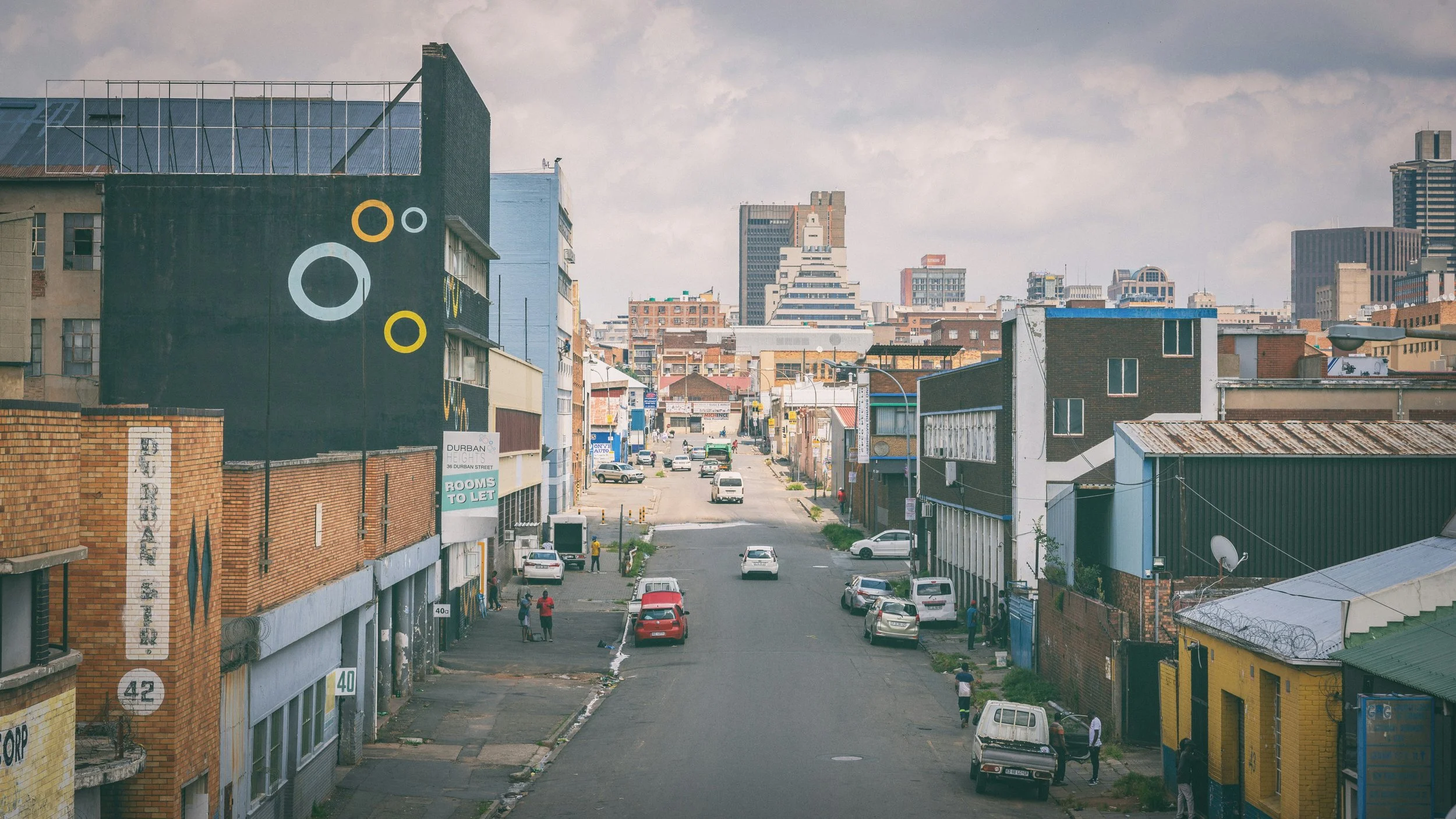
Johannesburg, South Africa. A country can be at peace while a woman living inside it is anything but safe
We have learned to picture a refugee in a particular way: There is usually a battlefield somewhere in the frame. A bombed city. An army. A border crossed under fire.
So when the country named is South Africa rather than Syria, Sudan or Ukraine, the question can come quickly:
But what is she fleeing? The answer matters.
It is a myth that a person has to come from a country at war to need refugee protection.
The 1951 Refugee Convention is not a test of whether someone’s country appears on the evening news. Refugee status centres on a well-founded fear of persecution for specific recognised reasons and whether a person can safely avail themselves of protection in their country of origin. Persecution can include physical or psychological violence, sexual violence and acts of a gender-specific nature. The person causing that harm does not necessarily have to be the government: Non State actors can also be responsible where effective protection against the persecution is unavailable.
Every asylum claim is individual. Amanda’s story reveals why “there is no war there” is the wrong question with which to begin. A country can be at peace while a woman living inside it is anything but safe. Some of the dangers that force women to run do not announce themselves with air-raid sirens. They happen behind closed doors, inside families,relationships - at the hands of people a woman is supposed to be able to trust.
They are quieter than war but that does not make them less real.
Leaving is not the same as escaping
Amanda was 18 when she ran. Her sister was 14. Her brother was 10. She had spent six years trying to protect them. Getting them out of the house was one thing. Knowing what to do with them next was another.
The three of them made it to Johannesburg, but Amanda felt ashamed to turn to her extended family for help. She began thinking about leaving South Africa altogether but she could not afford to take her young siblings with her.
For a young woman who had spent much of her childhood keeping her siblings close and trying to shield them from harm, Amanda made a decision that still sits heavily with her today: She left them in the care of a church.
It was another loss. A decision that no 18 year old should have to make, choosing between impossible options: stay with them without knowing how she could keep them safe, or leave them somewhere she hoped they would be protected and continue searching for safety herself, and return for them.
She left. She had hoped to reach a nearby country. Instead, she ended up in Malawi. There, a woman took her in. Amanda remembers her as kind. She became close enough to her that she called her Mama. For a while, there was food and somewhere to sleep but she soon was made to feel that she overstayed her welcome.
The woman arranged for her to travel towards Ethiopia with two men: Both men raped her. It was not the last time Amanda would be sexually assaulted during the journey.
“I was broken,” she remembers. “I felt that this is my fate.”
For five months, she stayed in a building with other girls. They slept on the ground and were given scraps of food. Amanda witnessed women being gang raped around her. Then, one day, police arrived. People scattered, as did Amanda. She walked with no idea where she was going. Eventually, an older woman found her, gave her food and somewhere to sleep. Through her, Amanda met another woman who helped her reach Cairo.
From there, her journey continued towards Turkey and eventually Greece. Written on a map, it can look like a route.
There is a temptation, when telling stories like Amanda’s, to continue cataloguing the horror, record every assault, every border, every frightening night, just for us to prove that it was bad enough. We are not going to do that. It was a journey shaped again and again by other people’s decisions, after she had already made one of the hardest decisions of her own life: leaving the two children she had spent her childhood trying to protect.
The extraordinary luxury of an ordinary problem
Amanda eventually reached Greece and came to live at AFW’s shelter in Athens.
The Amanda we met had spent so many years carrying other people, making decisions far beyond her age and surviving without anyone dependable to lean on that accepting help did not come naturally. At first, that made it difficult for her to trust support when it was offered.
Being fiercely independent kept her alive. Trusting someone else enough to share the weight was something entirely different. Alongside the practical support of her social worker, Amanda also met with AFW’s psychologist. She had not been waiting for somebody to teach her resilience. Life had demanded far too much of that already. What she was beginning to discover was that strength did not have to mean doing everything alone.
And slowly, life became smaller. In the best possible way.
There was a room. There were people nearby. There were belongings she could leave behind without wondering whether they would still be there when she returned.There were people who listened and laughed with her. Most days, nobody had to fight over the shower. The kitchen was occasionally another matter.
And there is something almost beautiful about that.
For years, Amanda’s problems had been enormous. Now, sometimes, the problem was simply that too many people wanted to use the kitchen.
We tend to speak about recovery in solemn language but sometimes recovery looks like having problems ordinary enough to complain about.
The strange power of knowing what a document is for
When we asked Amanda which support had been most useful to her, she spoke about her social worker, Iliana. And then she talked about paperwork: Documents, procedures, and information about her rights.
“It equipped me to move around.”
There is an entire theory of independence inside those words. For someone who already understands the systems around her, a document is a document. A government office is an inconvenience. A form is something annoying you have to fill in.
For someone trying to build a life in a country whose systems she does not yet understand, those things can determine how much control she has over her own life. Dependence is not always dramatic, and independence can begin with information.
Not somebody taking control of your life. Somebody giving you enough information to take more of it back.
Amanda’s complaint
Then there was Greek class. Amanda liked the pace, the schedule and being able to put what she learned into practice.
“I love the teacher’s style of teaching. It is very practical.”
We asked whether anything could be improved. Amanda had one complaint: “Not enough homework.” It may be the line that tells us most about her. Because stories about refugee women are so often written backwards. First comes the violence. Then the journey. Then the labels: Victim - Survivor - Refugee - Vulnerable woman.
One noun after another until the person underneath them begins to disappear.
Amanda has experienced extraordinary violence.Yes, but she is also a young woman who thinks her Greek teacher should be giving her more homework. She notices who listens well. She makes friends. She has opinions about kitchens. She wants information. She wants independence. She has criticisms. Like all of us, really.
A life that is hers

By the time Amanda was ready to leave the AFW shelter, she had a full-time job and had secured a studio apartment of her own. When we met again for her exit interview a month later, there was something else new in her life. Someone. And when she spoke about him, she was giddy. Delightfully, unmistakably giddy.
This is not the neat ending to a story about trauma: A job does not erase what happened to her. Neither does an apartment. Falling in love is not evidence that somebody has “recovered.”
They are simply parts of Amanda’s life now. And that matters. Because for so much of Amanda’s life, other people decided where she would live, where she would go, what would happen to her body and what her future would look like.
Now there is a job she goes to. She has a key to her own front door and someone in her life who makes her grin when she talks about him. Not symbols of a successful outcome.
Just pieces of an ordinary life that increasingly belongs to her.
Someone in your corner
Near the end of the interview, Amanda tried to explain what the people around her had meant during the time she lived at the shelter. “Thank you guys so much from the bottom of my heart,” she said. “Genuinely.”
Then: “You guys were what I was longing for.”
And finally: “Someone to back me up and just be there for me.”
There is an important difference between rescuing someone and standing beside her. Amanda had been carrying herself, and other people, through danger for years. She had protected her siblings while she was still a child. She had left a man she feared. She had kept going through circumstances she did not choose and across borders she had never planned to cross.
Courage was never the thing Amanda lacked. What she had lacked, for a very long time, was the luxury of not having to do everything alone. Perhaps that is why her description of safety is so small, and not freedom in some grand, cinematic sense: A room, a door closing, a stable pay check and being able to simply be.
And, for once, knowing she could come back.