One year of LEILA: a promise kept.
One year ago, LEILA was launched with a simple but urgent commitment: that no woman facing gender-based violence, and barriers to sexual and reproductive healthcare would have to navigate these challenges alone.
One year later, 127 women have shown us just how much.

Impact at a Glance (June 2025 – June 2026)
127
Requests for support
7
Languages
447
Hours of support
44
SRH appointments
What one year looks like

Photo credit: Vladyslav Dukhin
The women who contact LEILA are rarely facing a single problem: They are navigating gender-based violence alongside housing insecurity, legal precarity, language barriers, limited access to healthcare, economic hardship, and isolation. Each request sits within that wider reality.
Each response has to account for it.
As LEILA moved beyond its pilot phase, the work did not increase in volume, It became deeper and more complex. Many more that required sustained accompaniment over weeks and months.
Safety planning that had to flex with changing circumstances. Emotional support offered at whatever pace each woman could manage. Presence, not just response.
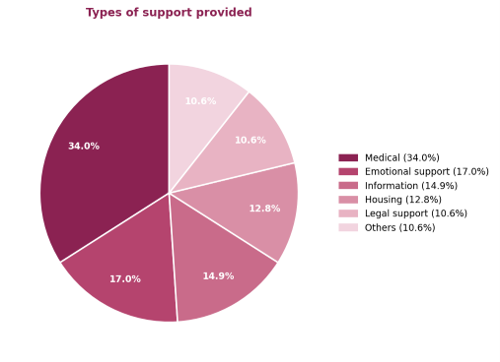
The most common requests over the past six months were healthcare-related, made possible through LEILA's partnership with Global Brigades: Contraception, STI testing, general check-ups, pregnancy-related care, and termination of pregnancy.
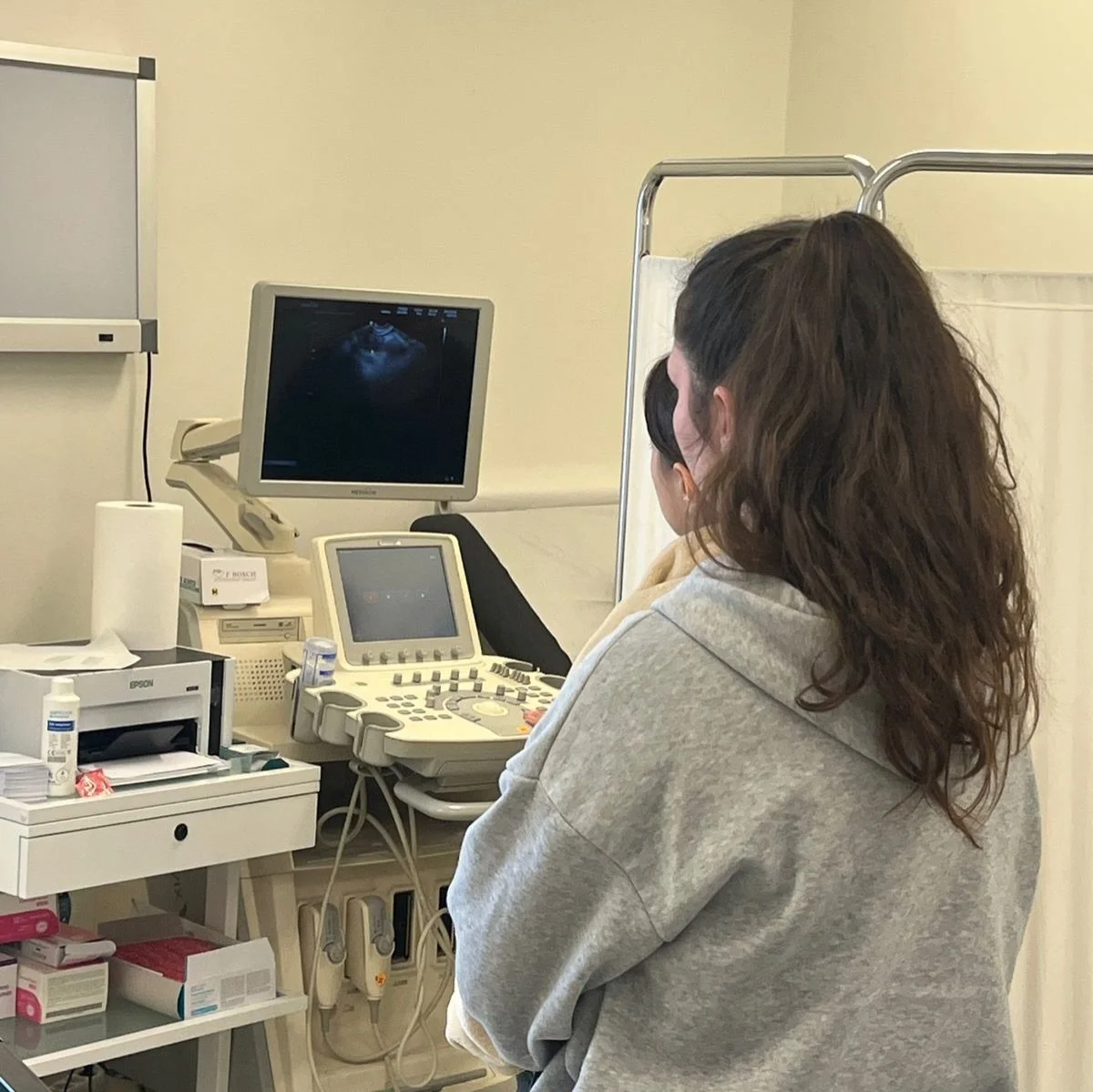
Photo credit: Global Bridges
Each required more than a referral. Each required someone to stay.
Real women. Real stories.
Numbers only tell part of the story. The women who contact LEILA trust us with some of the most difficult moments of their lives. Some of these stories have stayed with us.
We share them here, with all identifying details changed, because we believe that behind every statistic is a truth that deserves to be heard.
Lina
There is a particular kind of patience required in domestic violence response that nobody warns you about.
When Lina (not her real name) first contacted LEILA, she wasn't asking for a shelter placement. She did not ask us to call the police. In fact, she was not even sure what kind of situation she was in. She asked, quietly, almost testing the water, whether someone could just listen. That is how many conversations on LEILA begin: not with a plan, but with a single act of reaching out.
What followed since December was not a straight line. Lina felt isolated, overwhelmed, and trapped by circumstances that made even basic communication challenging. Her access to money was restricted, as was her mobility. She struggled to use her phone. There were weeks of silence when we did not know if she was safe and could only wait, never push, never demand contact, because for a survivor of abuse, control over the pace of disclosure is sometimes the only control she has left.
There were moments when she came close to a decision and then pulled back, not because she was wrong to, but because leaving is not a single act. It is a hundred small acts of preparation, fear, hope, and grief, repeated until they finally hold.
Leaving an abusive situation is rarely a single decision; it is a process. Survivors weigh risks that outsiders cannot always see. Fear, hope, love, dependency, trauma, isolation, and practical realities all become part of the equation.
This is the part of LEILA's work that does not show up in a single statistic.
Our numbers count cases, hours, languages, and appointments. They do not count the seven months it sometimes takes for a woman to trust that someone will still be there when she is finally ready.
We stayed in contact at the pace Lina could manage. Emotional support. Safety planning that flexed every time her circumstances changed. No ultimatums. No deadlines. Just the same message, in different forms, across seven months:
We are here, whenever you are ready, for as long as it takes.
Sometimes our role was simply to be present when she felt she had nowhere else to turn. Sometimes it was helping her think through options. Sometimes it was reminding her that her feelings mattered and that she deserved support.
Progress was not linear. There were times when the next step felt impossible. There were barriers at every turn: services expected her to make calls she could not make, leaving her exhausted and discouraged. Still, LEILA kept listening when Lina kept reaching out. And slowly, trust grew.
Seven months after our first contact, Lina is now working with a social worker and preparing to enter a shelter safely. That step did not happen because someone pushed her. It happened because she arrived at it herself, supported by people who respected her autonomy and remained alongside her throughout the process.
Her story is a reminder that survivor-centred support requires patience. Our responsibility is not to take control of a survivor's journey. It is to provide the information, support, safety planning, and compassionate presence that allow her to make informed decisions at her own pace.
LEILA was built on a promise: stability before growth, depth over scale, trust over visibility, and survivor autonomy over metrics. Lina's seven months are what that promise looks like in practice.
It is not a fast success. It is not a clean rescue narrative. It is the much harder, much more honest truth of this work: survivors cannot be pushed, leaving is a process rather than an event, and the most important thing LEILA can offer is not urgency, but constancy.
Beha
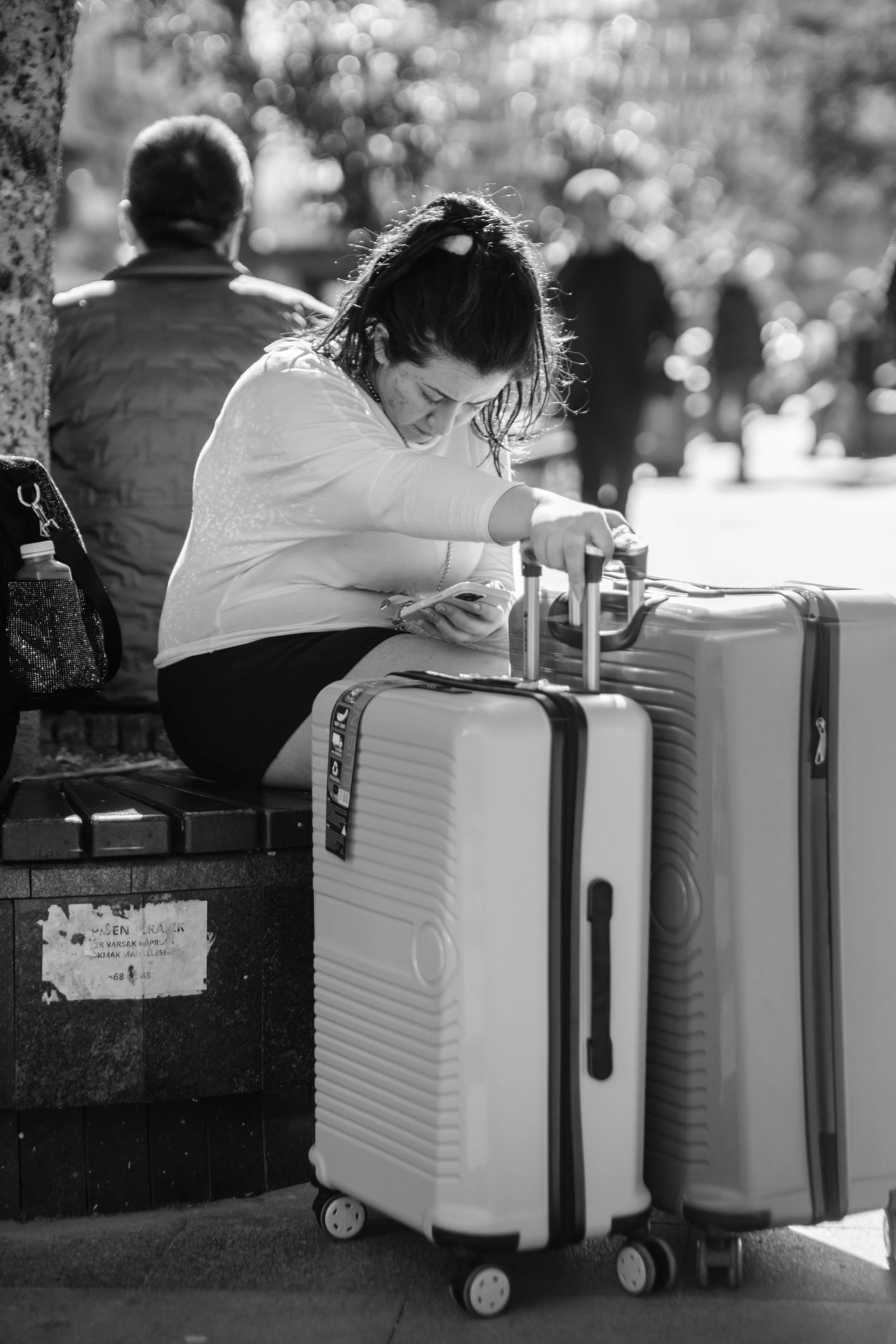
Photo credit: Ayşegül Aytören
Beha did not come to LEILA with a simple problem to solve. She came with the accumulated weight of everything that had happened to her in the space of a few months: An act of sexual violence, a deportation, a pregnancy, a child to protect, and nowhere to land.
For several years, Beha and her daughter had built a life in Germany. She had, as she later told us simply: "I had my life there." Then, one night, walking home, Beha was attacked on the street and raped. She told no one. Like many survivors, she carried it alone: The shock, the shame that was not hers to carry, the disbelief that this had happened to her. And then, before she had found any way to process what had happened, the letter arrived: her asylum application in Germany had been rejected. She and her daughter were to be deported to Greece.
They arrived with what they could carry. For people returned to Greece under deportation orders, there is almost no formal support infrastructure. No reception. No housing referral. No one is waiting.
For a period, they were homeless.
Eventually, a kind man and his family offered them shelter, and later helped them access a small studio. Beha was exhausted, isolated, and still carrying what had happened to her in Germany entirely alone.
It was only then that she realised she had missed her period. A test confirmed what she had feared: she was pregnant as a result of the rape. She contacted LEILA.
When we met Beha, she was in total shock, not only from the pregnancy, but from everything that had converged on her life in such a short time. A rape she had not been able to report. A deportation she had not been prepared for. A child she was protecting. A pregnancy she had not chosen and did not want to continue.
She was clear about what she wanted: To terminate the pregnancy. What she needed was someone to help her access a system she did not know how to navigate alone, in a language she did not fully speak, in a country she had not chosen to be in.
With LEILA's support, Beha was able to access a hospital, attend the necessary medical appointments, and proceed with the termination on her own terms, at her own pace, with someone beside her who understood both her situation and her rights.
She contacted us again afterwards. She was, she said, relieved, and already moving forward. Her daughter was registered for school. She was looking for work. She was, quietly and determinedly, beginning to build a life again in a country she had arrived in with nothing, under circumstances no one should have to survive.
Beha's story sits at the intersection of almost every issue LEILA was built to address: sexual violence, reproductive rights, the gaps in support for deported and undocumented women, language barriers, and the particular isolation of women who have no community around them when crisis hits.
She did not need someone to make decisions for her. She needed someone to make the system accessible enough that she could make her own.
What comes next
One year later, the principles that shaped LEILA from the beginning remain unchanged:
Stability before growth
Depth over scale,
Trust over visibility, and
Survivor autonomy over metrics.
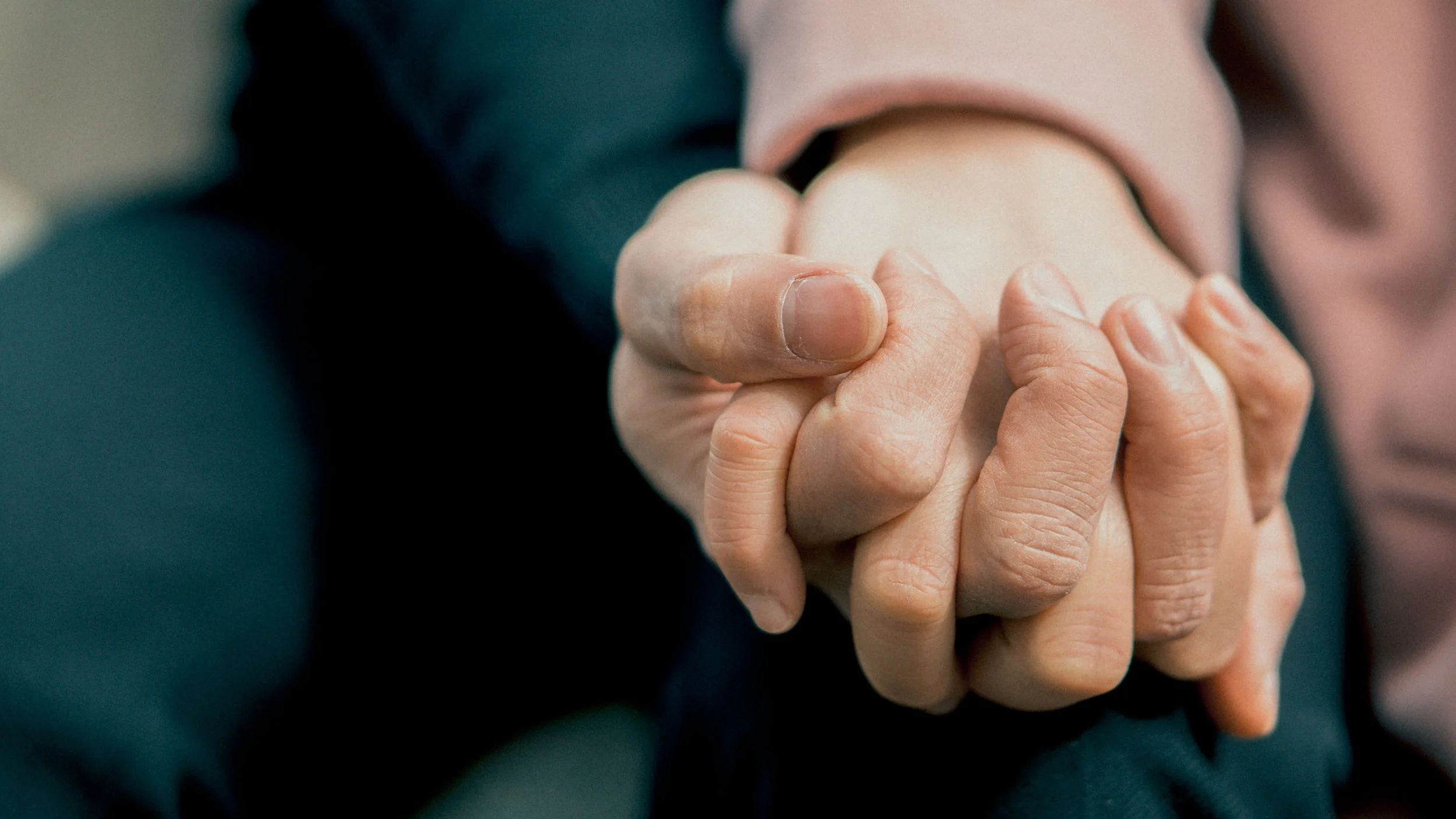
Photo credit: Sơn Bờm
The next stage of LEILA is not a new direction. It is the continuation of the promise we made from the beginning. Over the past year, LEILA has deepened its accompaniment, strengthened relationships with organisations providing legal and housing support, and expanded its capacity to remain alongside women through complex and evolving journeys.
In the year ahead, LEILA will continue strengthening its survivor-centred model through dedicated Arabic-speaking casework, expanded legal support, stronger interpretation and cultural mediation pathways, and long-term psychosocial accompaniment.
Because survivors do not only need someone who responds in moments of crisis. They need someone who stays.
If you believe in this work, please consider supporting LEILA.
In solidarity,
Gabrielle Tay
Founder