
LEILA is not a person. LEILA is a promise.
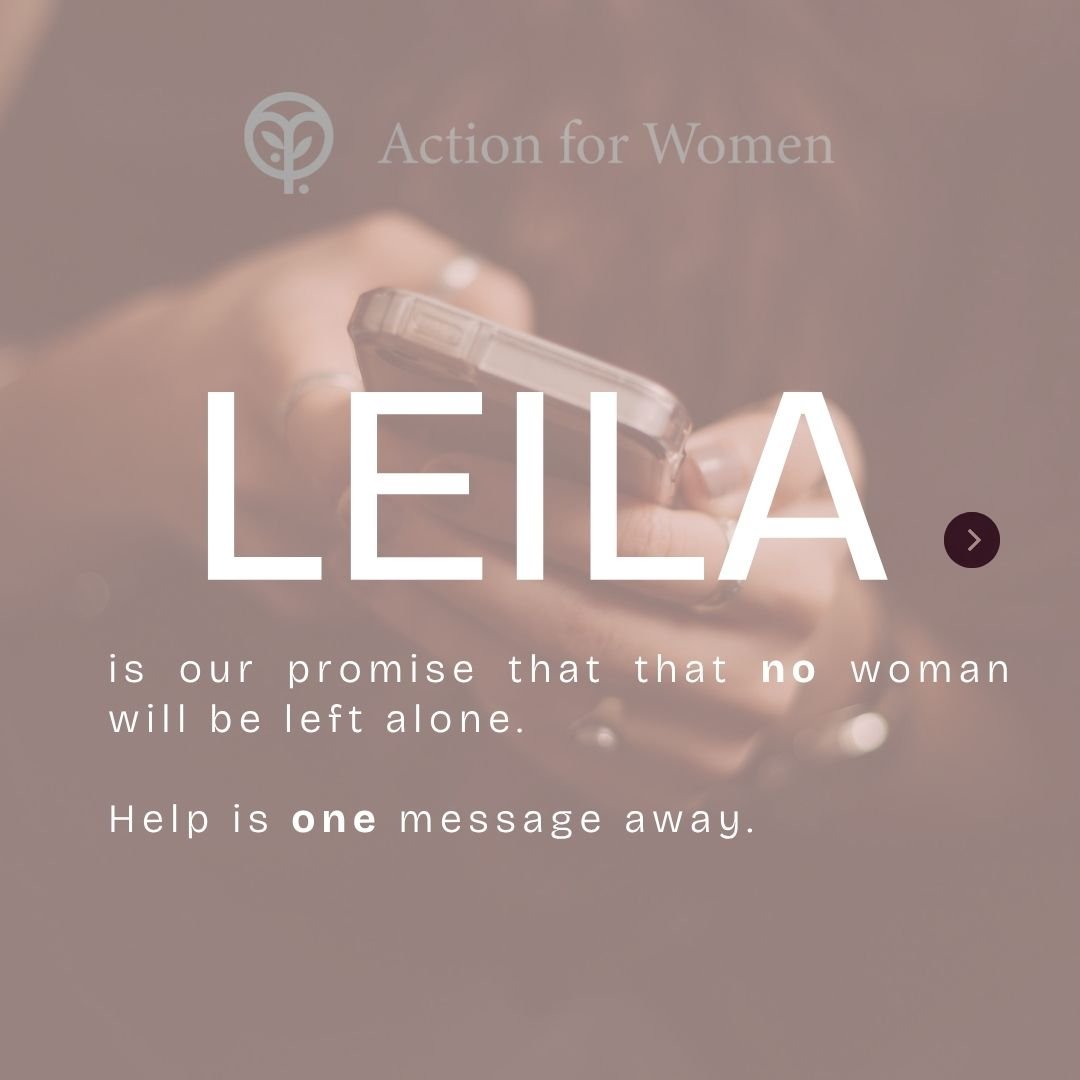
When a woman says she is “looking for LEILA,” she is not asking for information.
She is signalling that she needs help — and she will receive it.
LEILA was launched in June 2025, as essential services for survivors in Athens were disappearing. It was created to break through the barriers that make it nearly impossible for survivors, especially undocumented, migrant, and displaced women, to access help.
LEILA exists so women can reach out safely, in their own language, and on their own terms — without having to explain everything at once.
Impact at a Glance (Pilot Phase: June–December 2025)
84
Requests for support during a low-visibility pilot phase
7
Languages supported across hotline and clinical pathways
273
Hours of confidential survivor-centred support delivered
33
Sexual & reproductive health appointments enabled through trusted partners
A quiet door to support
Sometimes, the first time a woman asks for help, she doesn’t use the word violence.
She says: I need a doctor.
Or: I don’t feel safe.
Or: I think I might be pregnant.
Or: I can’t do this alone.
Many women do not contact a GBV hotline ready to disclose. They contact us because they are in urgent need, and because the system is not built to meet them with safety, language access, or dignity.
LEILA exists for that first sentence.
And for what comes after.
Real women. Real stories.
Ana’s story (name changed)
Ana’s story is one of thousands.
When she called the police, Ana could not speak the language as fluently as her perpetrator.
In spaces where language is power, this imbalance is not small. It can determine whether a woman is believed, whether she is protected, and whether she is safe.
Ana’s experience reflects what we see again and again: women navigating violence are often also navigating institutional barriers that silence them — especially when they are migrant or undocumented.
LEILA exists for moments like this — when a woman needs someone to stand beside her, to help her be heard, and to help her navigate systems that were never designed for her safety.
Fatima’s story (name changed)
Fatima needed to access her reproductive rights — but she couldn’t.
She speaks a rare language, one where female interpreters are almost impossible to find. When she tried to get help, she couldn’t communicate safely.
Without language access, even basic healthcare becomes dangerous — and choice disappears.
Then she found LEILA.
LEILA stayed with her through every step: navigating services, finding culturally sensitive support, and ensuring she was not alone in a system that often excludes women like her.
Fatima’s story is why LEILA exists:
so that women can access care with dignity, safety, and support — in their own language, on their own terms.
What LEILA has shown us during her pilot phase
Gender-based violence is rarely experienced in isolation: Women reaching out to LEILA are often navigating multiple layers of violence at once - including housing insecurity, legal vulnerability and fear of authorities, language exclusion, barriers within healthcare systems, economic insecurity, and social isolation.
For migrant, refugee, and undocumented women, the path to safety is not a single service.
It is a maze.
LEILA is designed to be a bridge through that maze. linking women from crisis to care.
What comes next
LEILA will grow slowly, ethically, and deliberately.
We are not pursuing scale at the expense of safety. We are prioritising what survivors need most: continuity, trust, and choice.
Our direction is guided by principles we have held from the beginning:
stability before growth. depth over scale. trust over visibility. survivor autonomy over metrics.
With sustained investment, LEILA will deepen accompaniment capacity, legal and housing referral pathways, long-term psychosocial support, interpretation and cultural mediation, and prevention and outreach through trusted community spaces.
Partners
We are deeply grateful to Global Brigades for their trusted partnership throughout LEILA’s pilot phase. Their all-female medical team helped make survivor-centred sexual and reproductive healthcare access possible for women who would otherwise have been excluded. In parallel, Action for Women delivered training to strengthen trauma-informed, survivor-safe response pathways within the clinical setting.
Support LEILA
When women reach out, they are often doing so at great risk.
LEILA exists so that when they do, they are not alone.
Because LEILA is more than a hotline.
It is a lifesaving bridge — linking women from crisis to care.
Learn more about LEILA
